PATHWAY 05 · NATURE-BASED
35.5951° N · 82.5515° W
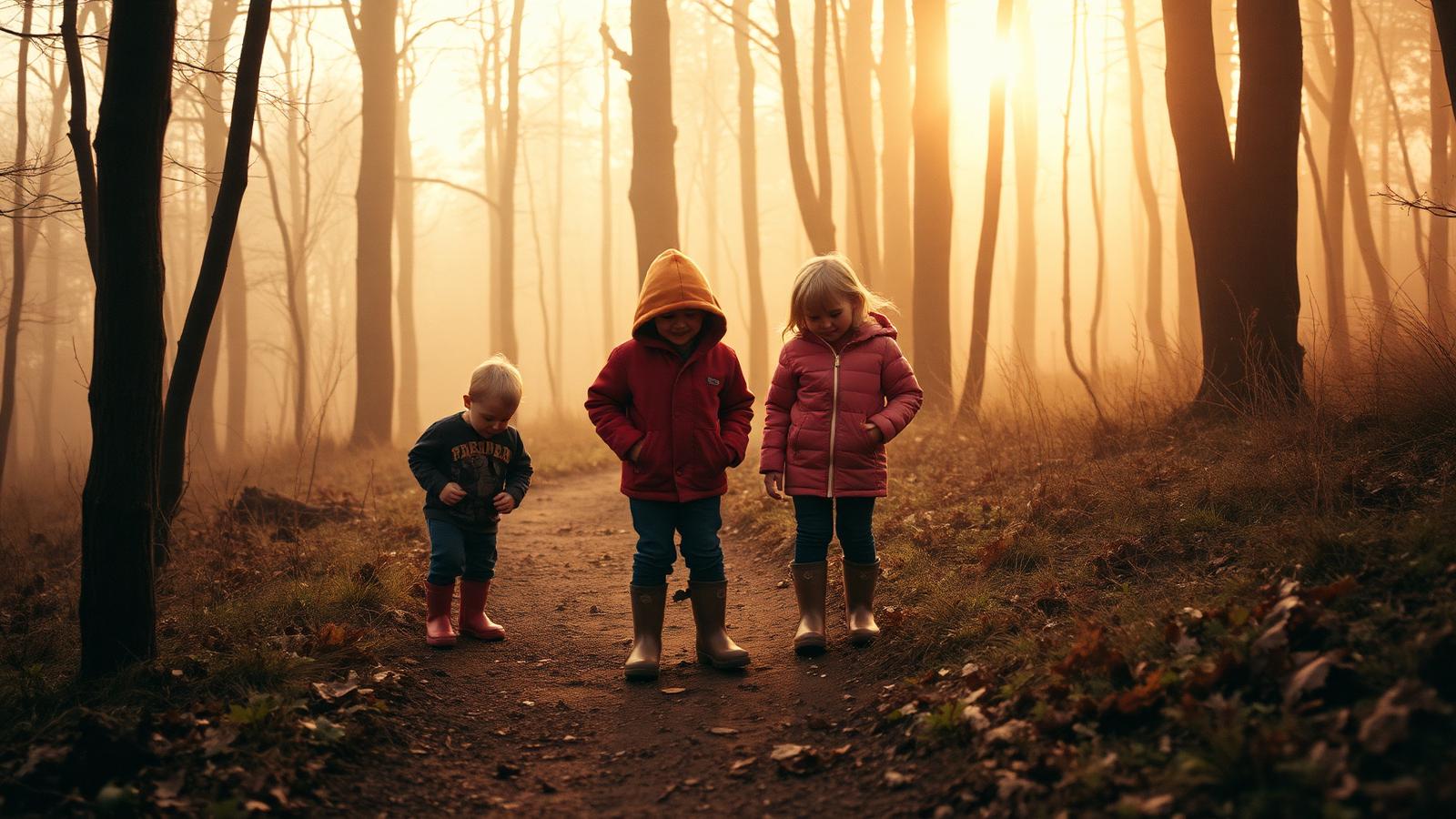
No bad weather, only bad clothing
Outdoor-centered learning rooted in the natural world — long hours outside in every season, with academics built around wonder.
Some families organize their homeschool around a table. These families organize theirs around a trailhead. Nature-based homeschooling puts sustained outdoor time at the center of childhood — the same woods and creeks visited again and again, in rain and frost and August heat — and lets observation, journaling, and free play anchor everything else.
The academics still happen. They're just shorter, more focused, and frequently interrupted by something more interesting under a log.
THE ROOTS
35.5951° N · 82.5515° W
Forest schooling grew from Scandinavian friluftsliv — open-air life — and Denmark's forest kindergartens of the 1950s, where young children spend most of the day outdoors year-round. The model spread to the UK in the 1990s and surged in the U.S. over the last decade, carried by research on nature and childhood and by homeschool communities like Wild + Free.
HOW IT WORKS
35.5951° N · 82.5515° W
- 01
Nature is the classroom. Regular, repeated time in the same outdoor places, in all weather.
- 02
Child-led free play. Long unstructured stretches; risk — climbing, whittling, fire — is managed, not eliminated.
- 03
Nature study as the spine. Observation, journaling, and naming what you find anchor science, art, and writing.
- 04
Rhythms over schedules. Days follow seasons and weather rather than bells.
- 05
Wonder before rigor. Direct experience precedes textbook abstraction, especially before age eight or so.
- 06
Whole-body learning. Movement, balance, and sensory work outdoors as the foundation for later desk skills.
A DAY ON THIS PATH
35.5951° N · 82.5515° W
A short morning-basket time at home — read-aloud, poem, a nature journal prompt — then hours outside: a hike, creek play, or a weekly nature co-op meetup, with lunch outdoors. Children collect, sketch, and identify their finds. Afternoons hold quiet handicrafts, reading, and following up the questions the woods raised. Math and phonics happen in short, focused morning bursts.
WHO THRIVES HERE
35.5951° N · 82.5515° W
High-energy kids. Families with outdoor access and parents happy to be outside daily. It's excellent for the early years, and steadying for sensory-seeking children.
WORTH WEIGHING
35.5951° N · 82.5515° W
Weather stamina and gear costs are real, and the path is parent-energy-intensive. Systematic math and phonics don't happen in the woods by osmosis — they need a deliberate supplement. It's also harder to sustain in dense urban settings, or through middle and high school without adding structure.
THE MISCONCEPTION
“It's just playing outside — not real school.”
Decades of research link sustained outdoor play to stronger executive function, motor skills, and academic resilience — and most nature-based families pair their outdoor days with a genuine literacy and math sequence.
TRAIL MARKERS
35.5951° N · 82.5515° W
Established organizations, curricula, and books to start with — chosen for depth, not commission. Perspective tags help every family self-select; we don't editorialize.
ORGANIZATIONS & COMMUNITY
The largest nature-based homeschool community; content bundles, local groups, and conferences.
- Free Forest SchoolSECULAR
Free, volunteer-led outdoor play groups for young children across North America.
Training, certification, and webinars for forest and nature schooling.
CURRICULA & PROGRAMS
The classic 48-week nature-study curriculum; one theme per week, Charlotte Mason-flavored.
- Blossom & RootSECULAR
Nature-based full curriculum, preK through elementary.
- Oak MeadowSECULAR
Accredited, nature- and arts-infused curriculum through high school — the option that scales to older kids.
The challenge, trackers, and app many families use as their outdoor-time backbone.
ON THE SHELF
Last Child in the Woods — Richard Louv
The book that named "nature-deficit disorder"; the why behind the movement.
The Call of the Wild and Free — Ainsley Arment
The movement's homeschool manifesto and starting guide, from Wild + Free's founder.
Balanced and Barefoot — Angela J. Hanscom
A pediatric occupational therapist on why unrestricted outdoor play builds strong, capable kids.
WORTH A LISTEN
High-volume, active interview podcast for outdoor-first families.
COMMON QUESTIONS
35.5951° N · 82.5515° W
Is nature-based homeschooling enough for real academics?
+
Outdoor learning anchors science, writing, and observation, but math and systematic phonics need a deliberate supplement — which is exactly how most nature-based families run it: short focused lessons in the morning, the woods after.
What do forest schooling families do in bad weather?
+
They go out anyway — the movement's motto is “no bad weather, only bad clothing.” Rain gear, wool layers, and shorter sessions keep winter outdoor time alive; genuinely dangerous conditions move the day indoors.
Can we do nature-based homeschooling in a city?
+
Yes, with more intention: city parks, community gardens, creek corridors, and weekly co-op meetups substitute for the backyard forest. The method needs repeated visits to the same green places more than it needs wilderness.
What age is forest schooling for?
+
The early years are its sweet spot — roughly ages two through ten. Families often keep the outdoor spine through the middle grades while layering in more structured academics, or scale it via programs like Oak Meadow.
WHERE PATHS CROSS
35.5951° N · 82.5515° W
This path shares a nature journal with Charlotte Mason and a rhythm-and-seasons sensibility with Waldorf. Families who follow the child's questions indoors often land near Reggio Emilia.
Not sure this is your path? Find your bearings.
Take the 5-minute quiz