PATHWAY 04 · MONTESSORI
35.5951° N · 82.5515° W
Help me do it myself
A child-led method built on prepared environments, hands-on materials, and deep respect for a child's concentration.
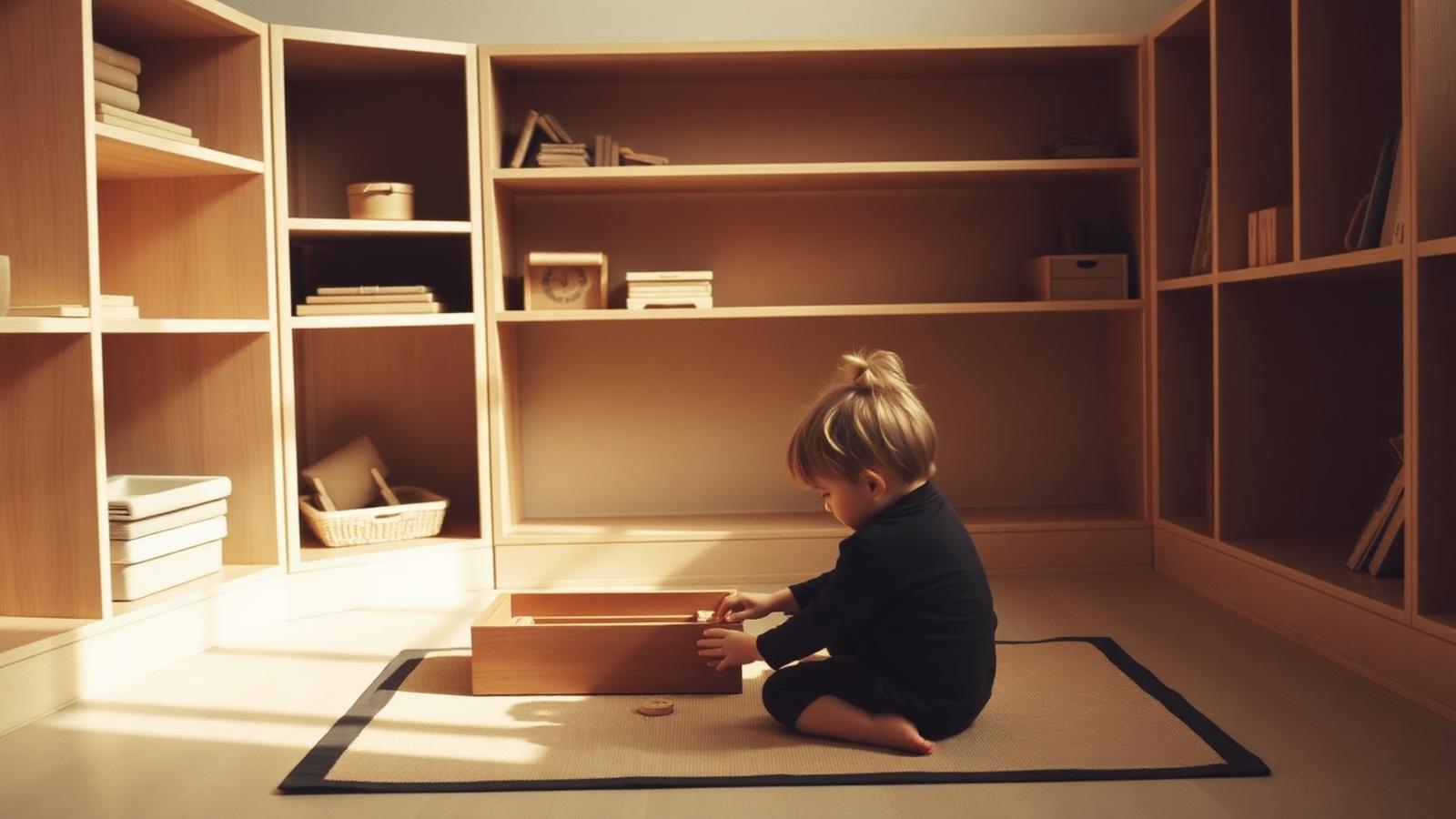
Montessori begins with an unusual act of faith: prepare the environment carefully, then step back. Low shelves hold beautiful, purposeful materials. The child chooses their work, concentrates as long as the work holds them, and finishes. The adult's job is to observe, to give short precise lessons, and — hardest of all — not to interrupt.
Homes adapt to this method naturally, because a home is already the original prepared environment. Pouring, dressing, and food prep aren't chores here. They're curriculum.
THE ROOTS
35.5951° N · 82.5515° W
Dr. Maria Montessori — Italy's first female physician — opened her Casa dei Bambini in Rome in 1907. Through clinical observation she concluded that children teach themselves when given a prepared environment, hands-on materials, and freedom within limits. Her method spread worldwide, and its home adaptation has grown steadily alongside it.
HOW IT WORKS
35.5951° N · 82.5515° W
- 01
The prepared environment. Child-sized, orderly, beautiful spaces where everything is reachable without adult help.
- 02
Follow the child. Observe what your child is drawn to and offer work that meets it.
- 03
Concrete before abstract. Golden beads and sandpaper letters come before equations and essays.
- 04
Independence as the goal. "Help me do it myself." Practical life skills are real curriculum.
- 05
Freedom within limits. Children choose their work inside a structure the adult designs.
- 06
Uninterrupted work periods. Long stretches of self-directed concentration instead of subject-switching.
A DAY ON THIS PATH
35.5951° N · 82.5515° W
A morning work cycle: the child chooses activities from low, organized shelves — math beads, letter work, practical life trays — while the parent observes and gives short one-on-one lessons. Afternoons lean outdoors, toward errands done with the child, and household work as learning. No worksheet block schedule; the rhythm is choice, concentration, completion.
WHO THRIVES HERE
35.5951° N · 82.5515° W
Families who value independence, order, and a calm rhythm. Parents willing to observe more than instruct. The method is strongest for roughly ages zero to nine.
WORTH WEIGHING
35.5951° N · 82.5515° W
Authentic materials are expensive, though DIY substitutes work. The parent must prepare and rotate the environment continually. Upper-elementary resources for home use thin out considerably, and children used to being entertained can take weeks to settle into self-directed work.
THE MISCONCEPTION
“Montessori means no rules — kids do whatever they want.”
It's a highly structured method; the structure simply lives in the environment and materials rather than in adult-led lesson plans. Freedom is always within limits.
TRAIL MARKERS
35.5951° N · 82.5515° W
Established organizations, curricula, and books to start with — chosen for depth, not commission. Perspective tags help every family self-select; we don't editorialize.
ORGANIZATIONS & COMMUNITY
The largest U.S. Montessori organization; standards, teacher education, and family resources.
U.S. affiliate of the organization Maria Montessori founded; the training lineage closest to the original method.
CURRICULA & PROGRAMS
- Child of the RedwoodsSECULAR
Montessori homeschool curriculum and parent coaching, built for home use rather than classrooms.
The original AMI-approved manufacturer of authentic Montessori materials.
Budget-friendly U.S. supplier of materials and printed curriculum support.
ON THE SHELF
The Montessori Toddler — Simone Davies
The bestselling parent-facing guide to Montessori at home, ages one to three; her The Montessori Child extends the map to twelve.
How to Raise an Amazing Child the Montessori Way — Tim Seldin
Illustrated birth-to-six home guide from the president of the Montessori Foundation.
WORTH A LISTEN
Simone Davies' active blog and podcast hub for Montessori parenting at home.
COMMON QUESTIONS
35.5951° N · 82.5515° W
Can I do Montessori at home without teacher training?
+
Yes. Home application asks for observation and a prepared environment, not certification. Parent-facing guides — Simone Davies' The Montessori Toddler, programs like Child of the Redwoods — are written exactly for untrained parents.
Is Montessori homeschooling expensive?
+
Authentic materials are costly, but few families buy the full classroom set. DIY versions, secondhand markets, and budget suppliers such as Alison's Montessori make home Montessori workable at ordinary budgets.
What ages does Montessori homeschooling work best for?
+
The home method is strongest from birth through roughly age nine. Homeschool resources for upper elementary and beyond thin out, and many families transition toward another path as children grow.
What is the difference between Montessori and Waldorf?
+
Montessori gives children real-world, hands-on materials early and follows their pace toward academics; Waldorf delays formal academics until around seven and leads with imagination, story, and art. Montessori discourages fantasy in early learning; Waldorf is built on it.
WHERE PATHS CROSS
35.5951° N · 82.5515° W
Montessori's prepared-environment thinking pairs naturally with Reggio Emilia, and its trust in the child echoes Unschooling — with considerably more shelving.
Not sure this is your path? Find your bearings.
Take the 5-minute quiz