PATHWAY 08 · UNSCHOOLING
35.5951° N · 82.5515° W
Life is the curriculum
Interest-led, life-as-learning — no required lessons, no grade levels, and a parent who curates rather than instructs.
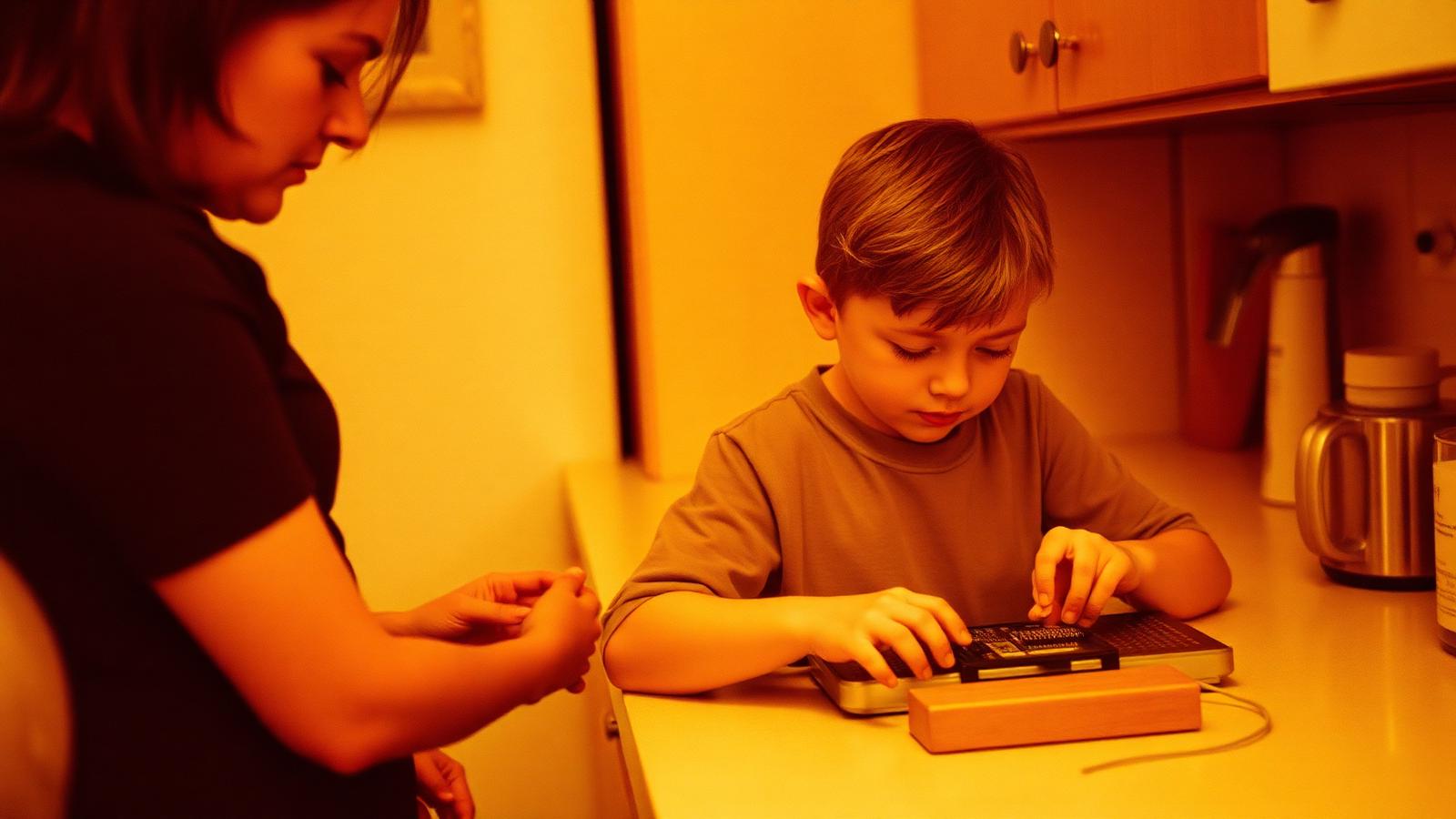
Unschooling makes the boldest wager on this map: that children are wired to learn, and that curiosity — given a rich environment and an engaged adult — will cover more ground than any syllabus. There are no required lessons, no tests, no grade levels. There is, instead, a family paying very close attention.
The parent's work is real, and different: supplying books, tools, classes, trips, and conversation; noticing sparks; and resisting the urge to turn every spark into a unit study.
THE ROOTS
35.5951° N · 82.5515° W
The word comes from educator John Holt, whose 1960s and 70s books argued that children are natural learners hindered by coercive schooling. Holt coined "unschooling" in his 1977 newsletter Growing Without Schooling — the first periodical of the American homeschooling movement. Today the approach often travels under the name self-directed education.
HOW IT WORKS
35.5951° N · 82.5515° W
- 01
Children are wired to learn. Curiosity, not curriculum, drives education.
- 02
Child-led entirely. Interests determine what gets studied, and for how long.
- 03
No required lessons, tests, or grade levels. Life itself is the curriculum.
- 04
The parent as facilitator. Books, tools, classes, trips, and conversation — supplied generously.
- 05
Learning isn't split from living. Cooking, gaming, errands, and projects all count.
- 06
Trust over enforcement. Strong relationships replace rewards and requirements.
A DAY ON THIS PATH
35.5951° N · 82.5515° W
There is no standard day — by design. A child might spend the morning deep in Minecraft redstone circuits (logic, engineering), the afternoon at the library or a park meetup, the evening baking (fractions, chemistry) or chasing a question down a rabbit hole with a parent's help. Parents "strew" interesting materials and watch for what catches.
WHO THRIVES HERE
35.5951° N · 82.5515° W
Families with an available, engaged parent and a high tolerance for uncertainty. Kids who chafe under imposed structure. Research on grown unschoolers — notably by psychologist Peter Gray — finds solid rates of college and career success.
WORTH WEIGHING
35.5951° N · 82.5515° W
It demands enormous parental attention and trust. Progress is hard to document in strict-reporting states, math often needs deliberate attention, and gaps relative to school scope-and-sequence are real — though unschoolers argue they close fast once motivation arrives.
THE MISCONCEPTION
“Unschooling is unparenting — kids just do whatever they want.”
Done well, it's among the most engaged forms of parenting there is: a deliberately rich environment, deep involvement in kids' pursuits — just no imposed syllabus.
TRAIL MARKERS
35.5951° N · 82.5515° W
Established organizations, curricula, and books to start with — chosen for depth, not commission. Perspective tags help every family self-select; we don't editorialize.
ORGANIZATIONS & COMMUNITY
Nonprofit advocating self-directed education, co-founded by Peter Gray; directories, articles, and a magazine.
The official archive of Holt's work and the complete GWS magazine.
Active online community for unschooling parents.
CURRICULA & PROGRAMS
Unschoolers use resources, not curricula.
- OutschoolSECULAR
A marketplace of live online classes for ages three to eighteen; interest-driven, à la carte.
- Khan AcademySECULAR
Free, self-paced lessons from kindergarten through college; the default on-demand math backstop.
Accredited private school (est. 1967) whose off-campus program wraps transcripts and a diploma around self-directed learning.
ON THE SHELF
Teach Your Own — John Holt & Pat Farenga
The founding text of the movement, updated in 2021.
How Children Learn — John Holt
Holt's classic on natural learning.
Free to Learn — Peter Gray
The evidence-based case for self-directed education, from a Boston College psychologist.
WORTH A LISTEN
Four hundred-plus episodes since 2016, still actively publishing.
COMMON QUESTIONS
35.5951° N · 82.5515° W
Is unschooling legal?
+
Yes, in all fifty states — unschooling is homeschooling in the eyes of the law. Families in stricter states satisfy reporting through portfolios, umbrella schools such as Clonlara, or the state's assessment options.
How do unschooled kids learn math?
+
Through life — cooking, money, building, games — plus on-demand resources like Khan Academy when interest or need arrives. Many unschooling parents give math deliberate attention, since it is the subject least likely to be absorbed incidentally.
Can unschoolers get into college?
+
Yes. Research by psychologist Peter Gray found grown unschoolers pursuing higher education and skilled careers at solid rates. Applicants typically present portfolios, community college credits, or umbrella-school transcripts.
Is unschooling the same as unparenting?
+
No. Done well, it is among the most engaged forms of parenting: a deliberately rich environment, constant conversation, and real involvement in children's pursuits — just no imposed syllabus.
WHERE PATHS CROSS
35.5951° N · 82.5515° W
Unschooling's trust in the child underpins Worldschooling and echoes through Reggio Emilia and Montessori. Families who want its spirit with more scaffolding drift Eclectic.
Not sure this is your path? Find your bearings.
Take the 5-minute quiz