PATHWAY 07 · TRADITIONAL
35.5951° N · 82.5515° W
School, on your own terms
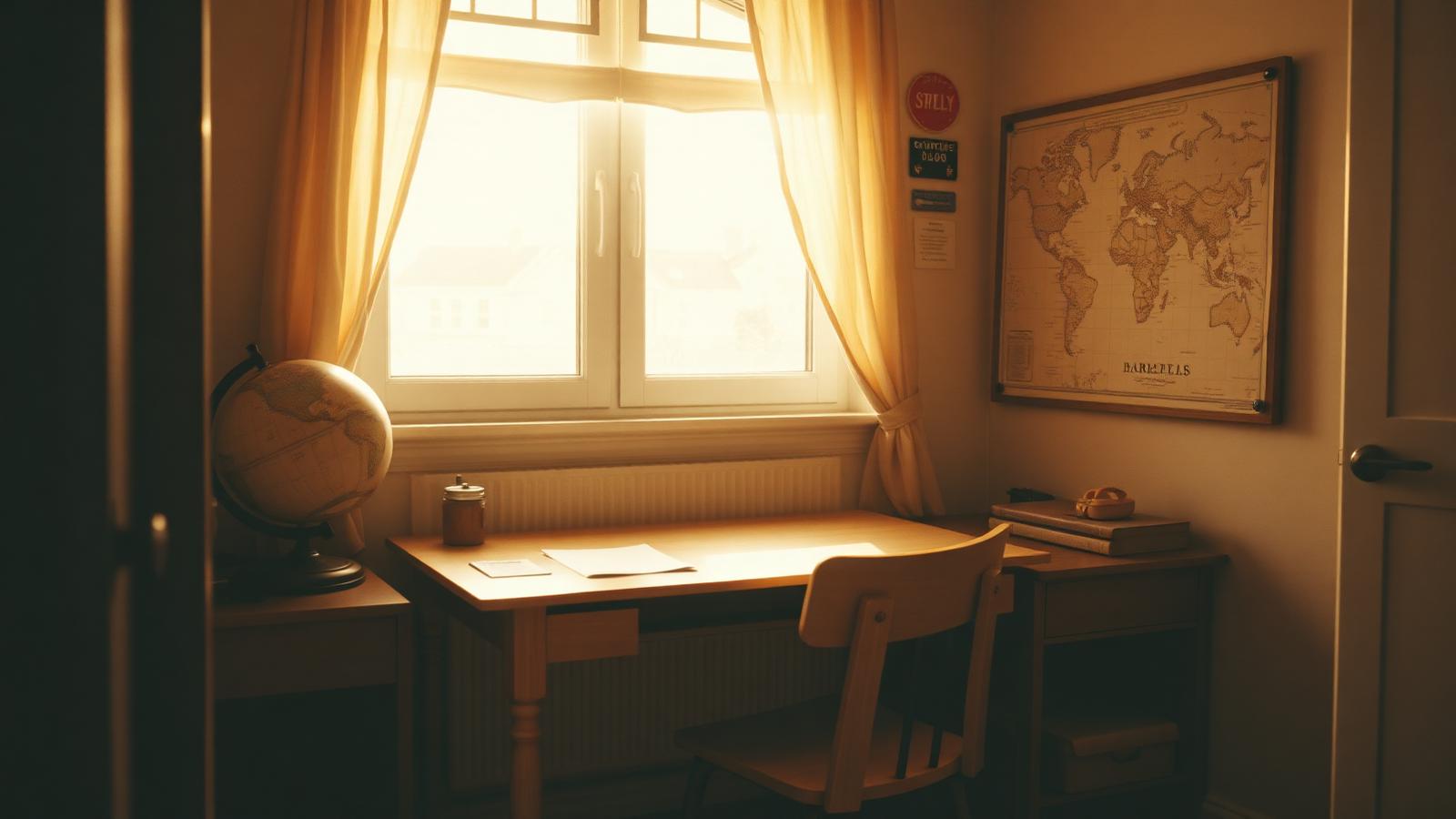
The conventional classroom, rebuilt in the living room — complete curricula, real grades, and a familiar structure many families start with.
Traditional homeschooling keeps what school does well — sequence, structure, measurable progress — and moves it home, where one-on-one attention makes it dramatically faster. Set subjects, graded textbooks or online lessons, tests, records: the familiar architecture, minus the classroom management and the bus.
It is the least intimidating on-ramp in this guide, and for many families the first mile of a longer journey. Plenty stay; plenty loosen up after year one. Both are fine outcomes.
THE ROOTS
35.5951° N · 82.5515° W
The path runs back to early correspondence education — Calvert began mailing complete boxed courses to families in 1906 — and became the default model of the modern homeschool movement in the 1980s, when publishers began selling full-year, all-in-one curricula directly to parents.
HOW IT WORKS
35.5951° N · 82.5515° W
- 01
A complete, sequenced curriculum covers each subject at each grade level.
- 02
The parent as teacher, following a teacher's guide or scripted lessons.
- 03
Regular assessment. Quizzes, tests, grades, and records that mirror school.
- 04
Grade-level benchmarks keep the child aligned with public-school scope and sequence.
- 05
A predictable schedule with defined school hours.
- 06
Clear separation between school time and the rest of home life.
A DAY ON THIS PATH
35.5951° N · 82.5515° W
Mornings run like a compressed school day: math, language arts, then science or history in blocks of twenty to forty-five minutes, working from workbooks or an online platform while the parent checks work against an answer key. Without a classroom to manage, a full school day is often finished by lunch — leaving afternoons for co-ops, sports, and free time.
WHO THRIVES HERE
35.5951° N · 82.5515° W
Families who want structure, measurable progress, and easy re-entry into conventional school. New homeschoolers finding their footing. Families in states with strict reporting requirements.
WORTH WEIGHING
35.5951° N · 82.5515° W
It's among the more expensive and parent-labor-intensive styles, and it can import school's worst features — busywork, burnout, resistance — into the home. Many families keep the structure but loosen the grip after the first year.
THE MISCONCEPTION
“It's just public school at the kitchen table — so why bother?”
One-on-one instruction moves far faster than a classroom. Families keep the structure but typically finish in three to four hours, customizing pace subject by subject.
TRAIL MARKERS
35.5951° N · 82.5515° W
Established organizations, curricula, and books to start with — chosen for depth, not commission. Perspective tags help every family self-select; we don't editorialize.
ORGANIZATIONS & COMMUNITY
Research-driven nonprofit founded by homeschool alumni; plain-language state-law summaries and best practices.
- HSLDAFAITH-ROOTED
Membership-based homeschool legal-defense association and state-law reference.
CURRICULA & PROGRAMS
- Calvert HomeschoolSECULAR
One of the oldest U.S. homeschool programs (est. 1906); all-in-one print and online courses.
- Time4LearningSECULAR
Self-paced online PreK–12 curriculum with automated grading and reporting; a popular low-prep option.
- AbekaCHRISTIAN
Complete K–12 textbook and video curriculum.
- The Good and the BeautifulFAITH-ROOTED
Popular open-and-go boxed curriculum, much of it free as PDF; broadly Christian, values-based content.
ON THE SHELF
The Well-Trained Mind — Susan Wise Bauer & Jessie Wise
The standard reference for rigorous, structured academics at home.
Home Learning Year by Year — Rebecca Rupp
Grade-by-grade guide to what to cover when.
The Brave Learner — Julie Bogart
How to keep structured homeschooling warm and sustainable; the standard antidote to school-at-home burnout.
WORTH A LISTEN
The most-used independent curriculum review site; labels every product secular or religious.
COMMON QUESTIONS
35.5951° N · 82.5515° W
How long does school-at-home take each day?
+
Typically three to four hours for a full day's work. One-on-one instruction removes the waiting that fills a classroom, so families keep the structure while finishing by lunch in the elementary years.
Is traditional homeschooling accredited?
+
Curricula themselves are not accredited — schools are. Some providers (Calvert among them) offer accredited distance-school enrollment with transcripts; otherwise families keep records under their state's homeschool law, which is what colleges actually review.
Can my child go back to regular school afterward?
+
Yes — this path makes re-entry the smoothest, since children stay aligned with public-school scope and sequence. Keep grades, samples, and any standardized test results to ease placement.
What does traditional homeschooling cost?
+
All-in-one programs run from budget online options (Time4Learning) to several hundred dollars per grade for full boxed curricula (Abeka, Calvert, The Good and the Beautiful — much of the last available free as PDF).
Not sure this is your path? Find your bearings.
Take the 5-minute quiz